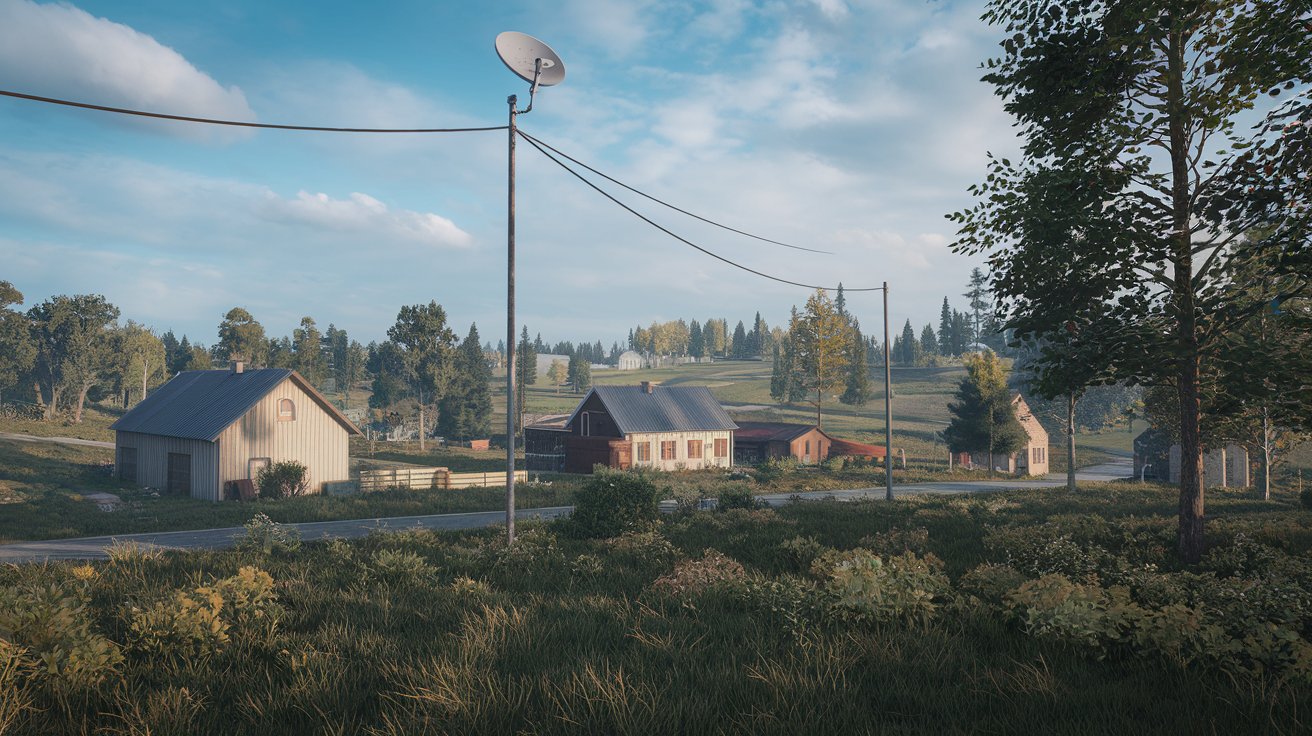
Internet for Remote Areas: Best Rural Options 2025 Guide
Finding reliable internet for remote areas can be challenging, but 2025 brings new solutions for rural connectivity. From Starlink rural internet to cellular networks and government programs, remote residents now have multiple options to access high-speed internet with speeds up to 100+ Mbps in previously underserved locations.
Best Internet Options for Remote Areas in 2025
The landscape of internet for remote areas has dramatically improved with technological advances and increased infrastructure investment. Rural Americans can now choose from several reliable connectivity options including satellite internet, cellular networks, fixed wireless, and DSL services. Each option offers different speeds, pricing structures, and coverage areas to meet diverse needs in remote locations.
When selecting the best internet for remote areas, consider factors like data allowances, latency, installation requirements, and monthly costs. Modern solutions can deliver speeds ranging from 25 Mbps for basic needs up to 500+ Mbps for bandwidth-intensive activities like video streaming and remote work.
Satellite Internet Solutions
Satellite internet for rural areas has become the most popular choice for remote connectivity. Starlink leads the market with over 2 million subscribers in the US as of 2024, offering speeds between 50-200 Mbps with low latency under 50ms. Hughesnet and Viasat provide alternative satellite options with plans starting at $50-70 monthly, though with higher latency around 600-700ms for traditional geostationary satellites.
Cellular and 5G Home Internet
Cellular-based internet works off cell towers and has expanded significantly in rural areas. Verizon 5G Home Internet covers over 40 million households, while T-Mobile Home Internet serves 50+ million locations with speeds up to 245 Mbps. These services typically cost $50-60 monthly with no data caps, making them competitive alternatives where cellular coverage is strong.
How to Get High-Speed Internet in Rural Areas
Getting high-speed internet in rural areas requires assessing available infrastructure and choosing the right technology for your location. Start by checking coverage maps from major providers to determine which services reach your area. Most providers now offer online tools to verify service availability using your exact address or coordinates.
Installation processes vary by provider type. Satellite internet for rural areas requires professional dish installation with clear sky visibility, while cellular internet uses plug-and-play equipment. Fixed wireless providers may need line-of-sight to transmission towers, and DSL requires existing phone line infrastructure.
Coverage Area Assessment
Before committing to any internet for remote areas service, conduct thorough coverage research. Use provider websites, FCC broadband maps, and local telecommunications resources to verify signal strength and service quality in your specific location. Contact neighbors and local businesses to gather real-world performance feedback from actual users.
Equipment and Installation Requirements
Different rural internet solutions have varying equipment needs. Satellite services require roof or ground-mounted dishes, while cellular internet uses indoor gateway devices. Some providers include equipment costs in monthly fees, while others charge separate equipment fees ranging from $100-600 for hardware and installation.
Cheapest Internet for Remote Areas
Finding the cheapest internet for remote areas involves comparing not just monthly costs but also equipment fees, data allowances, and contract terms. DSL remains the most affordable option where available, with plans starting around $30-40 monthly. However, speeds are typically limited to 25 Mbps or less in most rural locations.
Government assistance programs can significantly reduce costs for qualifying households. The Affordable Connectivity Program provides up to $30 monthly discounts for broadband service, while some states offer additional rural internet subsidies. Lifeline programs specifically target low-income rural residents with discounted telecommunications services.
Unlimited Internet for Remote Areas
Unlimited internet for remote areas has become more accessible as providers recognize rural market demand. Starlink offers truly unlimited data with no throttling, while cellular providers like T-Mobile and Verizon provide unlimited home internet plans in covered areas. However, some providers implement network management policies during peak usage periods.
Traditional satellite providers like Hughesnet and Viasat offer unlimited data plans but may reduce speeds after monthly data thresholds. These fair access policies ensure network stability while providing continuous connectivity for basic internet needs even after high-speed data allowances are exceeded.
Data Management and Usage
Managing data consumption on unlimited internet for remote areas requires understanding provider policies and optimizing usage patterns. Stream videos during off-peak hours when possible, use data compression tools, and monitor monthly usage through provider apps or dashboards to avoid unexpected slowdowns.
Provider Comparison for Unlimited Plans
Compare unlimited plans by examining actual speeds, data prioritization policies, and customer service quality. Starlink rural internet provides the most consistent unlimited experience, while cellular providers offer competitive pricing but may have location-dependent performance variations.
Rural Internet Government Programs
Rural internet government programs in 2025 continue expanding through federal and state initiatives. The Infrastructure Investment and Jobs Act allocated $65 billion for broadband expansion, with significant portions dedicated to rural connectivity. The USDA’s ReConnect Program provides grants and loans for rural broadband infrastructure development.
State-specific programs complement federal efforts. For example, California’s broadband initiatives target underserved rural communities, while Texas offers rural broadband grants. These programs often partner with private providers to extend fiber networks and improve existing infrastructure in remote areas previously considered economically unfeasible.
Internet for Remote Areas Near Me
Finding internet for remote areas near me requires localized research and community networking. Contact local government offices, rural electric cooperatives, and regional internet service providers to discover area-specific options. Many rural communities develop their own broadband solutions through municipal networks or cooperative arrangements.
Use the FCC’s National Broadband Map to identify all providers serving your specific location. This updated database shows detailed coverage information and speed capabilities for each provider, helping you make informed decisions about available internet for remote areas services in your immediate vicinity.
Local Provider Research
Regional and local providers often offer competitive alternatives to national companies. Rural electric cooperatives increasingly provide fiber internet services to their members, while fixed wireless internet service providers (WISPs) serve specific geographic areas with targeted solutions for internet for remote areas.
Community Resources and Support
Local libraries, community centers, and rural development organizations provide valuable resources for researching internet options. Many areas have broadband committees or technology task forces working to improve rural connectivity and can provide insider knowledge about upcoming service expansions or community broadband projects.
Starlink Rural Internet Performance and Pricing
Starlink rural internet has revolutionized remote connectivity since expanding nationwide coverage. With over 5,000 satellites in low Earth orbit, Starlink provides consistent speeds averaging 100+ Mbps in most rural locations. The residential plan costs $120 monthly plus $599 for equipment, making it competitive with other high-speed rural internet options.
Performance varies by location and network congestion, but most rural users report significant improvements over previous internet options. Starlink’s mobility features allow temporary relocation of service, making it popular among RV users and seasonal residents who need flexible internet for remote areas.
Related video about internet for remote areas
This video complements the article information with a practical visual demonstration.
Essential Q&A about internet for remote areas
How do I get internet in a remote area?
Start by checking coverage maps for satellite internet providers like Starlink, Hughesnet, and Viasat, as they offer the widest rural coverage. Also verify cellular internet availability from Verizon and T-Mobile, and contact local fixed wireless providers. Most remote areas can access at least one high-speed internet option as of 2025.
Which is the best internet for rural areas?
Starlink currently leads for performance with speeds of 50-200 Mbps and low latency under 50ms. However, cellular home internet from T-Mobile and Verizon offers competitive speeds at lower monthly costs where coverage is available. The best choice depends on your specific location, budget, and speed requirements.
What internet works off cell towers?
Cellular home internet services use cell towers to provide broadband connectivity. T-Mobile Home Internet, Verizon 5G Home Internet, and AT&T Fixed Wireless all utilize existing cellular infrastructure to deliver high-speed internet to rural homes, typically offering speeds between 25-300 Mbps depending on tower proximity and network technology.
What is the cheapest internet option for rural areas?
DSL remains the cheapest where available, starting around $30-40 monthly, though speeds are limited. For higher speeds, T-Mobile Home Internet at $50 monthly offers excellent value. Government programs like the Affordable Connectivity Program can reduce costs by $30 monthly for qualifying households across all provider types.
Do rural internet government programs help reduce costs?
Yes, several programs reduce rural internet costs. The Affordable Connectivity Program provides up to $30 monthly discounts for eligible households. The FCC’s Lifeline program offers additional discounts, and state programs provide supplementary assistance. The Infrastructure Investment and Jobs Act also funds rural broadband expansion projects.
Is unlimited internet available for remote areas?
Yes, truly unlimited internet is available through Starlink with no data caps or throttling. Cellular providers like T-Mobile and Verizon offer unlimited home internet plans in covered rural areas. Traditional satellite providers offer unlimited plans but may reduce speeds after monthly data thresholds of 150-300 GB.
| Provider Type | Speed Range | Monthly Cost | Best For |
|---|---|---|---|
| Starlink Satellite | 50-200 Mbps | $120/month | Remote areas with no other options |
| Cellular Home Internet | 25-245 Mbps | $50-60/month | Areas with strong cell coverage |
| Traditional Satellite | 25-100 Mbps | $50-150/month | Budget-conscious rural users |
| Fixed Wireless | 25-100 Mbps | $40-80/month | Rural areas with local WISP coverage |