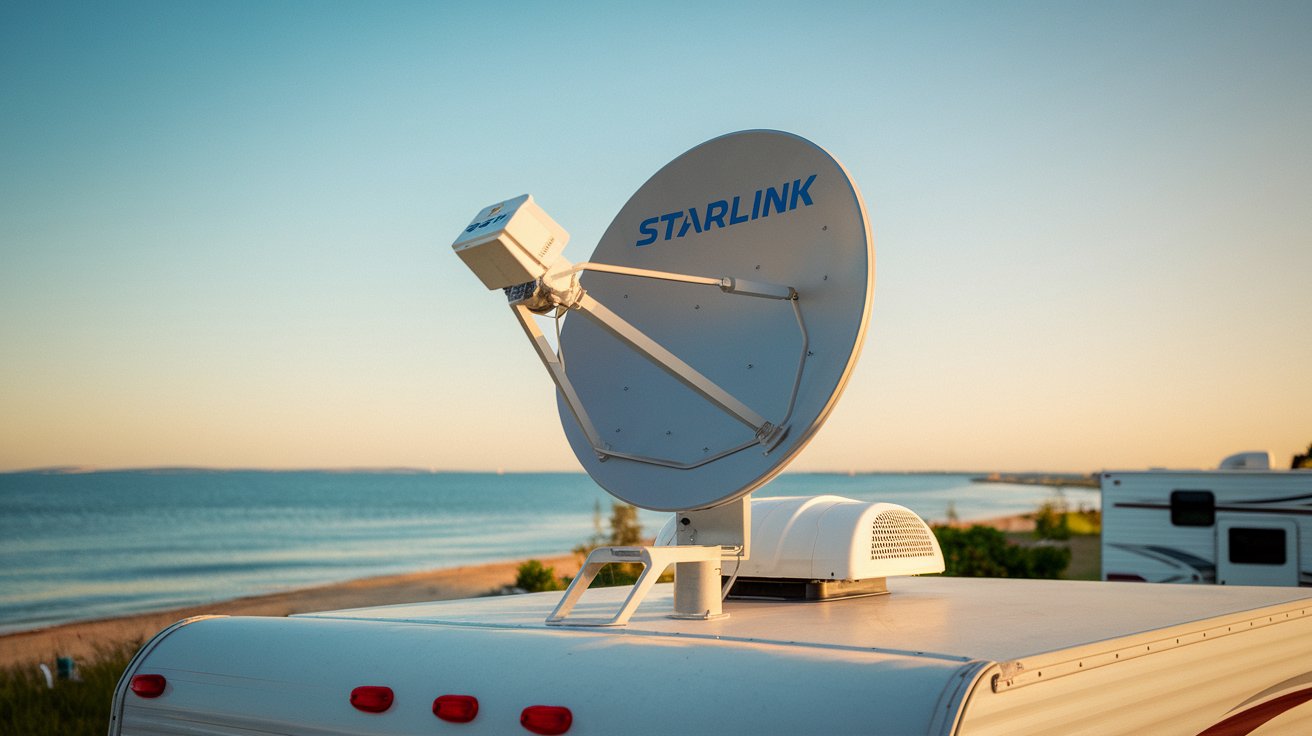
Starlink Maritime vs RV: Complete 2025 Comparison Guide
Choosing between Starlink Maritime and RV plans depends on your specific connectivity needs and travel patterns. While both services provide high-speed internet through SpaceX’s satellite constellation, the key differences lie in pricing, coverage areas, and intended use cases. Maritime plans cost significantly more but offer unrestricted ocean access, while RV plans provide affordable land-based connectivity with some water limitations.
Key Differences Between Starlink Maritime vs RV Plans
The fundamental difference between Starlink Maritime and RV services centers on their designed environments and regulatory compliance. Maritime plans are specifically engineered for ocean use with enhanced salt-water resistance and marine-grade hardware, while RV plans target land-based recreational vehicles with standard weather-resistant equipment.
Starlink Maritime plans include global ocean coverage and comply with international maritime regulations, enabling users to maintain connectivity while crossing international waters. The hardware undergoes rigorous testing for marine environments, including vibration resistance and corrosion protection that exceeds standard RV requirements.
Coverage Area Differences
The Starlink maritime coverage map extends far beyond coastal waters, providing service in international waters where RV plans cannot function. Maritime coverage includes ocean areas up to 12 nautical miles from shore initially, with expanded coverage reaching hundreds of miles offshore as of 2024. RV plans restrict usage to land-based locations and may experience service interruptions when used on boats in coastal waters.
Hardware Specifications
Maritime hardware features enhanced weatherproofing with IP56 rating compared to the IP54 rating of RV equipment. The maritime dish includes specialized mounting systems designed for vessel movement and vibration, while RV dishes use standard tripod or roof mounts suitable for stationary or slow-moving vehicles. Both systems use the same core satellite communication technology but differ in environmental protection levels.
Starlink Maritime vs RV Cost Analysis 2025
The Starlink Maritime price per month significantly exceeds RV plan costs, reflecting the specialized technology and expanded coverage. As of 2025, Maritime plans start at $250 per month for coastal coverage, while unlimited ocean coverage costs $5,000 monthly. In contrast, RV plans begin at $120 per month for regional coverage and $165 for nationwide roaming.
Hardware costs also differ substantially, with Maritime plan equipment priced at $2,500 compared to $599 for RV hardware. The higher maritime costs reflect marine-grade components, enhanced weatherproofing, and specialized mounting systems required for ocean environments.
Monthly Service Pricing Breakdown
Starlink Maritime unlimited plans offer the highest tier of service at $5,000 monthly, providing unrestricted global ocean access with priority data allocation. Coastal maritime plans at $250 monthly limit coverage to within 12 nautical miles of shorelines. RV plans offer more affordable options with regional coverage at $120 monthly and nationwide roaming at $165, making them accessible for recreational travelers.
Equipment and Installation Costs
The initial investment varies significantly between services, with maritime equipment requiring specialized installation by certified marine technicians. RV installations can typically be completed by users following provided instructions, reducing overall setup costs. Maritime installations often exceed $1,000 in professional installation fees, while RV setups generally cost under $200 for professional mounting.
Does Starlink RV Work on a Boat?
While Starlink RV can technically work on boats in coastal waters, this usage violates Starlink’s terms of service and may result in service suspension. RV plans are geofenced to prevent ocean use and lack the marine-grade hardware necessary for reliable boat operation. Users attempting to use RV equipment on vessels often experience connectivity issues and potential hardware damage from salt spray exposure.
The primary limitation stems from regulatory compliance, as RV plans lack maritime licensing required for ocean communication services. Additionally, RV hardware’s standard weatherproofing proves insufficient for marine environments, leading to corrosion and performance degradation over time.
Performance Comparison: Speed and Reliability
Starlink Maritime vs RV performance varies primarily due to coverage prioritization and hardware capabilities. Maritime plans receive priority satellite access, ensuring consistent speeds even during peak usage periods. Ocean coverage typically delivers 50-200 Mbps download speeds, while coastal areas may achieve higher rates up to 350 Mbps.
RV plans experience variable performance based on location and network congestion, with speeds ranging from 25-100 Mbps in optimal conditions. Rural areas and popular camping destinations may see reduced speeds during peak hours due to network prioritization policies favoring residential users.
Latency and Data Priority
Maritime connections maintain consistent low latency between 25-50ms due to priority network access, essential for real-time communications and navigation systems. RV plans experience higher latency variation, ranging from 30-80ms depending on network congestion and geographic location.
Weather Performance
Both services experience weather-related performance impacts, but maritime hardware demonstrates superior resilience during severe weather conditions. The enhanced weatherproofing and vibration resistance of maritime equipment maintains connectivity in conditions that might disrupt RV service.
Why is Starlink Maritime So Expensive?
The high cost of Starlink Maritime reflects several factors including specialized marine-grade hardware, regulatory compliance costs, and limited market size. Maritime equipment undergoes extensive testing for salt-water environments, vibration resistance, and international regulatory approval, significantly increasing manufacturing costs compared to standard RV hardware.
Additionally, maritime coverage requires dedicated satellite resources and international licensing agreements that add operational expenses. The smaller maritime market compared to land-based users means these costs are distributed across fewer subscribers, resulting in higher per-user pricing.
Coverage Maps and Service Areas 2025
The Starlink maritime coverage map encompasses major shipping lanes, coastal waters, and popular cruising destinations worldwide. As of 2025, coverage extends throughout the Atlantic, Pacific, and Indian Oceans, with expansion continuing into previously underserved regions. Coastal coverage reaches 12-200 nautical miles offshore depending on the specific plan selected.
RV coverage focuses on land-based areas throughout North America, with expanding service in Mexico and parts of South America. The coverage map includes major highways, national parks, and popular camping destinations, though some remote areas may experience limited service availability.
User Reviews and Real-World Experience
Analysis of Starlink maritime vs RV reviews reveals distinct user satisfaction patterns based on intended use cases. Maritime users consistently praise the service’s reliability in ocean environments but frequently cite cost concerns. Professional maritime operations report high satisfaction with uptime and customer support, while recreational boaters often find the pricing prohibitive for casual use.
RV user reviews emphasize value and convenience, with most users satisfied with performance for recreational travel needs. Common complaints include speed variations in popular camping areas and occasional service interruptions during peak travel seasons.
Professional Maritime Feedback
Commercial maritime operators report 95% uptime rates and praise the service’s reliability for critical communications and navigation support. Professional users appreciate the priority support and dedicated account management included with maritime plans.
RV Traveler Experiences
Recreational RV users consistently rate the service highly for enabling remote work and entertainment while traveling. Most users report adequate speeds for video streaming and video conferencing, though some experience slower performance in congested areas during peak seasons.
Related video about starlink maritime vs rv
This video complements the article information with a practical visual demonstration.
Questions & Answers
What is the difference between Starlink maritime and roam?
Starlink Maritime provides ocean coverage with marine-grade hardware starting at $250 monthly, while Roam (formerly RV) offers land-based connectivity starting at $120 monthly. Maritime plans include salt-water resistant equipment and global ocean access, whereas Roam plans are designed for terrestrial travel with standard weather protection.
Is there a difference between Starlink and Starlink RV?
Standard Starlink requires a fixed service address and costs $120 monthly, while Starlink RV (now called Roam) allows mobile use for $120-165 monthly with lower network priority. RV plans enable travel connectivity but may experience slower speeds during network congestion compared to residential service.
Does Starlink RV work on a boat?
Starlink RV technically functions on boats near shore but violates terms of service and lacks proper marine equipment. The service is geofenced to prevent ocean use, and standard RV hardware isn’t designed for salt-water environments, leading to potential corrosion and service suspension.
Why is Starlink Maritime so expensive?
Starlink Maritime costs more due to marine-grade hardware ($2,500 vs $599), specialized salt-water resistance, international regulatory compliance, and dedicated satellite resources. The smaller maritime market compared to land users means higher per-subscriber costs for the enhanced equipment and global ocean coverage.
| Service Aspect | Maritime Plan | RV Plan |
|---|---|---|
| Monthly Cost | $250-$5,000 | $120-$165 |
| Hardware Cost | $2,500 | $599 |
| Coverage Area | Global oceans | Land-based only |
| Best For | Ocean vessels | Land travel |